Two summers ago, after a snowy escape and three lazy days in Keylong; I was finally greeted by a warm sunny morning. As the sunrays transitioned from being gentle to harsh, I found myself back in Old Manali for the umpteenth time. An old friend was arriving the next day and I decided to ditch the fancy cafes here for some real experience.
Browsing through the “Kullu Valley attractions” online, a day visit to Naggar castle seemed like an ideal choice.
Whether you drive from Manali (about 20 km) or take a bus from Kullu (roughly 22 km); the journey is equally charming. Buses and taxis shuttle regularly from both towns to Naggar – a picturesque village perched on the left bank of the Beas in Himachal Pradesh’s Kullu Valley.
Naggar Castle stole the show first with a tale of its own—stone and wood architecture, legends of Kullu kings, and scenic valley views. A post-visit coffee in one of the charming cafes nearby fuelled the mountain vibes.
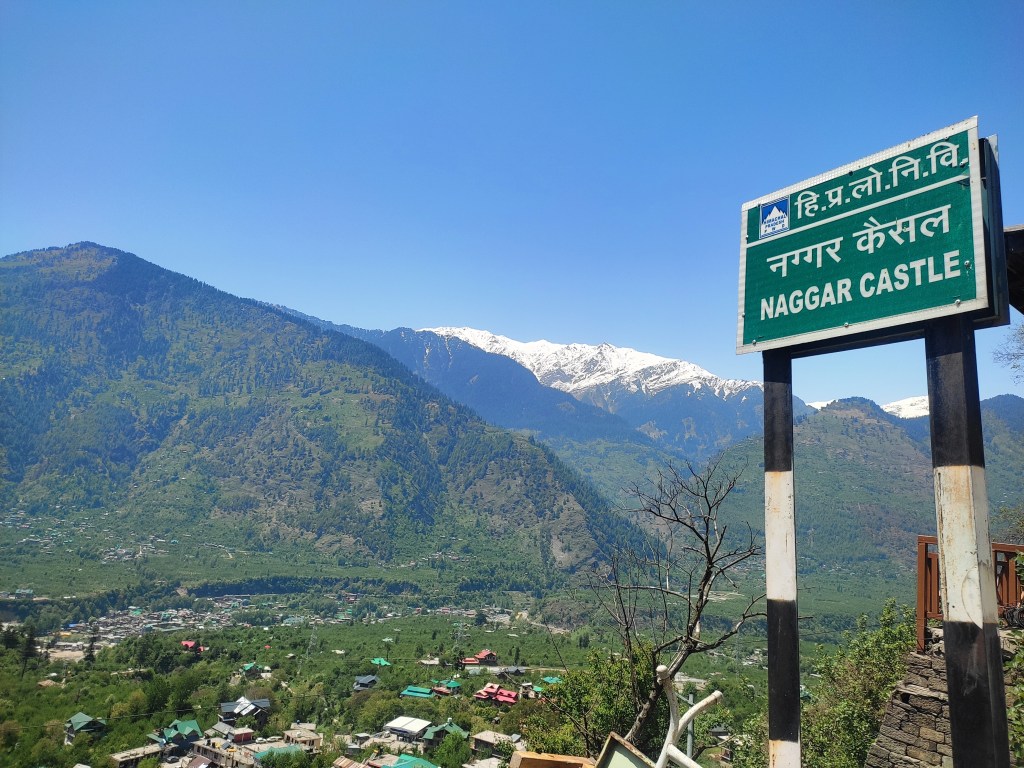
A view from Naggar Castle – Our first stop
Our exploration continued further from Naggar Castle – a gentle ascent through deodar groves, with not many humans but chirping birds being our only companions. As we kept walking through the winding mountain road up from the valley; the pine scented air filled our lungs with the Beas River glinted below.
Discovering More in Naggar – The Roerich Art Gallery
Somewhere in this mountainside calm, just a short distance from the storied Naggar Castle, lies the Roerich Art Gallery—often referred as the “Naggar Art Gallery” by locals. The place feels like a serene portal to the Himalayas painted through Nicholas Roerich’s brushstrokes capturing its mystic soul.
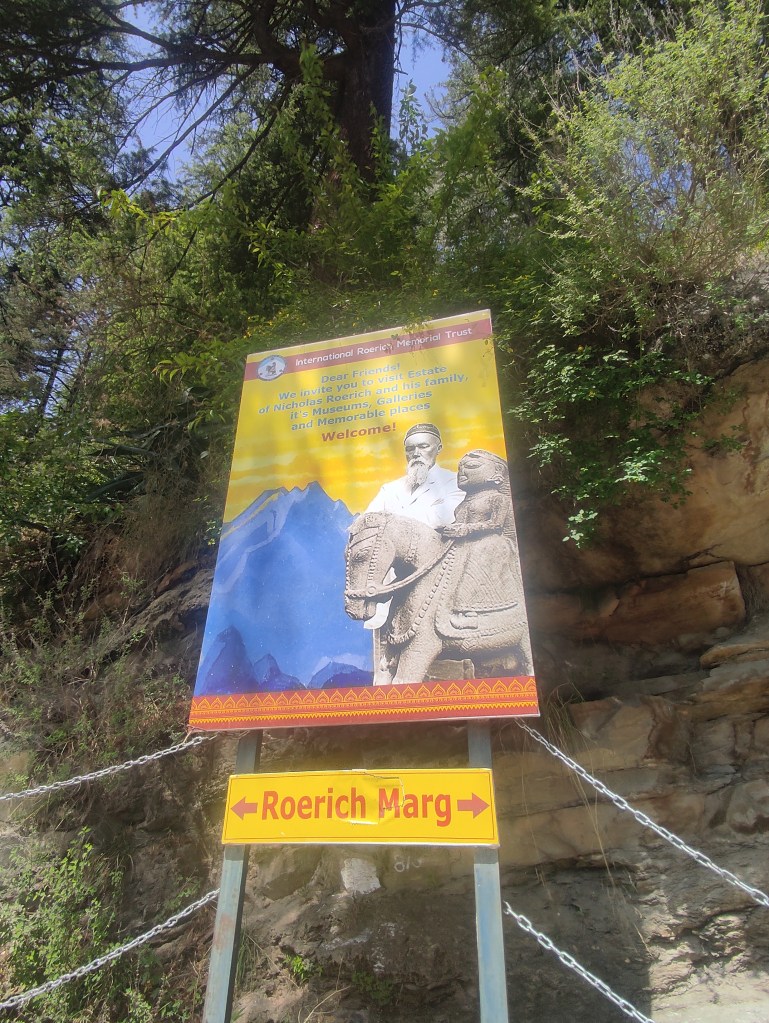
The signage to Roerich Estate
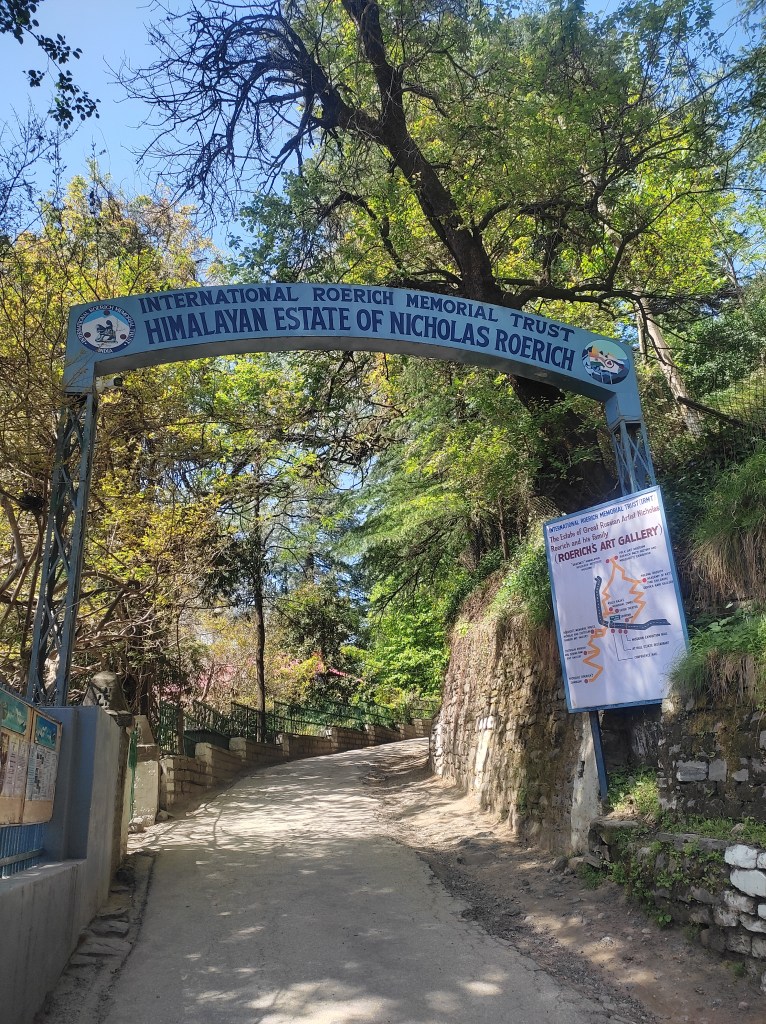
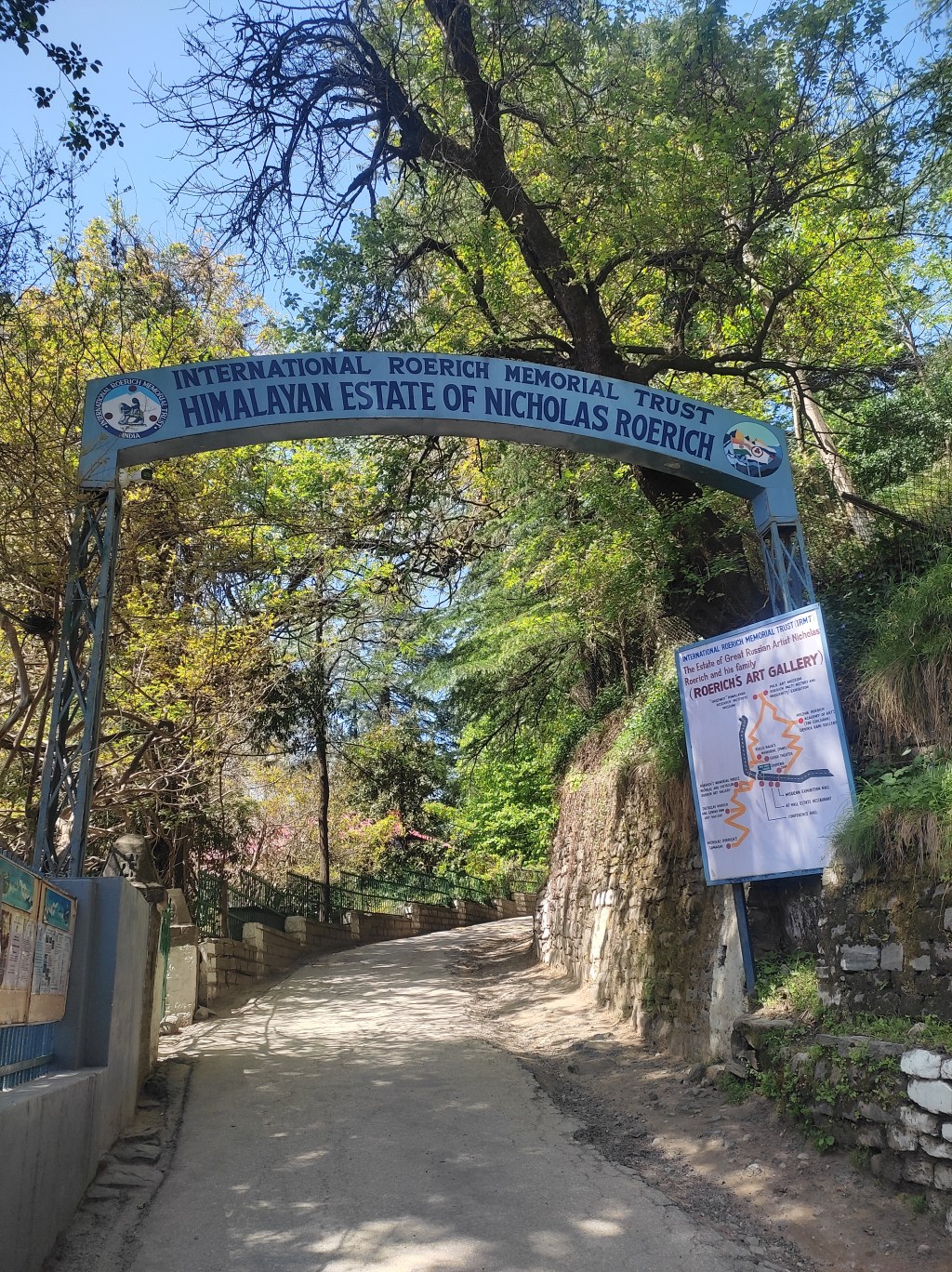
Stepping on the estate
Good to Know
- Location: 1.5-2 km from Naggar Castle, an easily walkable path
- Entry fee: Rs 50 (Indian) – As in April 2022
- What’s inside: Roerich’s Himalayan paintings, folk art, local costumes, preserved heritage rooms.
The entry fee supports the preservation of this sanctuary of art and memory. If you bring a camera, you’ll pay a modest extra but leave with impressions to cherish long after your visit.
An Artist’s Home and a Window to the Himalayas
As we stepped on the Roerich Estate’s gates, there was a sense of rich taste and aesthetically done premises. The Himalayan landscape seemed to merge with the creative energy of Nicholas Roerich—a Russian painter, explorer, and visionary who settled here in the 1920s making these mountains his muse.
At the entrance, spot the “Kullu Rajahs Memorial Stones” lined against a makeshift stone wall to your left. A short, rugged climb takes you to the main house on the estate.
A sturdy, stone-and-wood home, once his residence; is now the heart of the International Roerich Memorial Trust. The house sits quietly, wrapped in cedars. There’s a gallery on the ground floor opening its doors to visitors nearly every day. We passed through the manicured lawns and scattered sculptures shining in the mountain light.
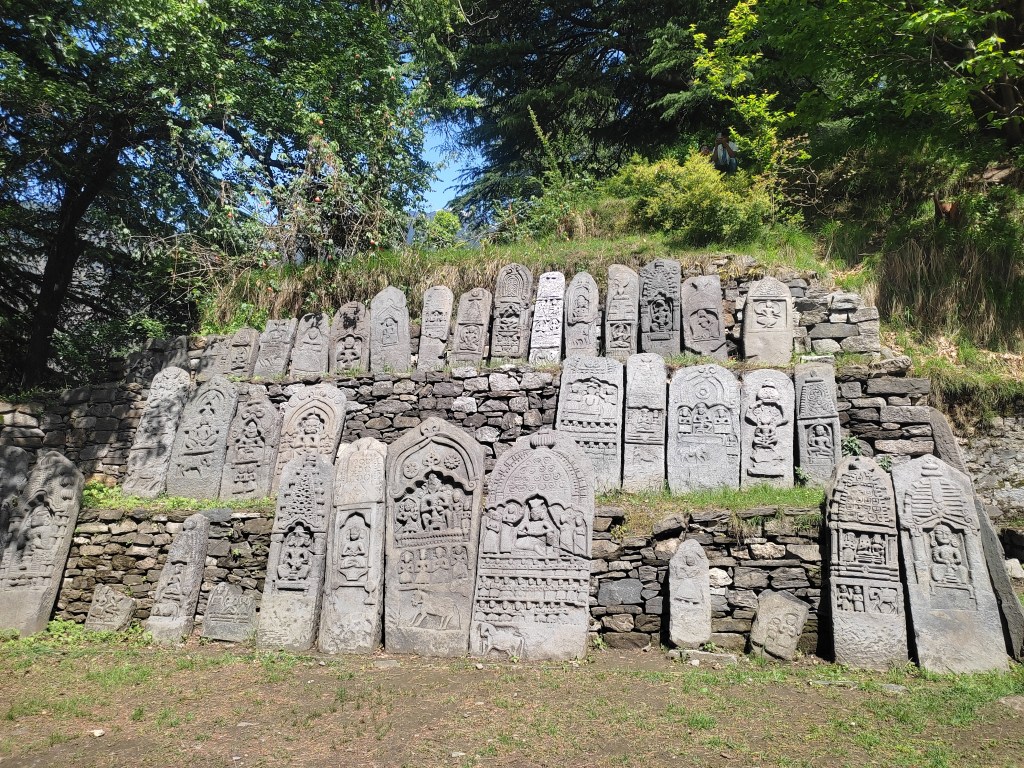
The “Kullu Rajahs Memorial Stones”
Exploring the Gallery – Paintings, Memories, and the Legacy of Roerich
With leisurely steps; we entered the gallery. A quiet reverence greeted us with utter calmness. This building was once Roerich’s home; decades later, his son Svetoslav Roerich transformed it into a museum, preserving not only the man’s art but his spirit. The main exhibit is in the ground floor; original Nicholas Roerich paintings. In no time; you will be lost in Roerich’s world of snowy valleys, serene monasteries, and enigmatic mountain trails.
What distinctively caught my attention was a descriptive wall map near the stairs charting the major Himalayan regions and how they are connected. Needless to say, it sparked many a travel dreams adding to my “travel list”.
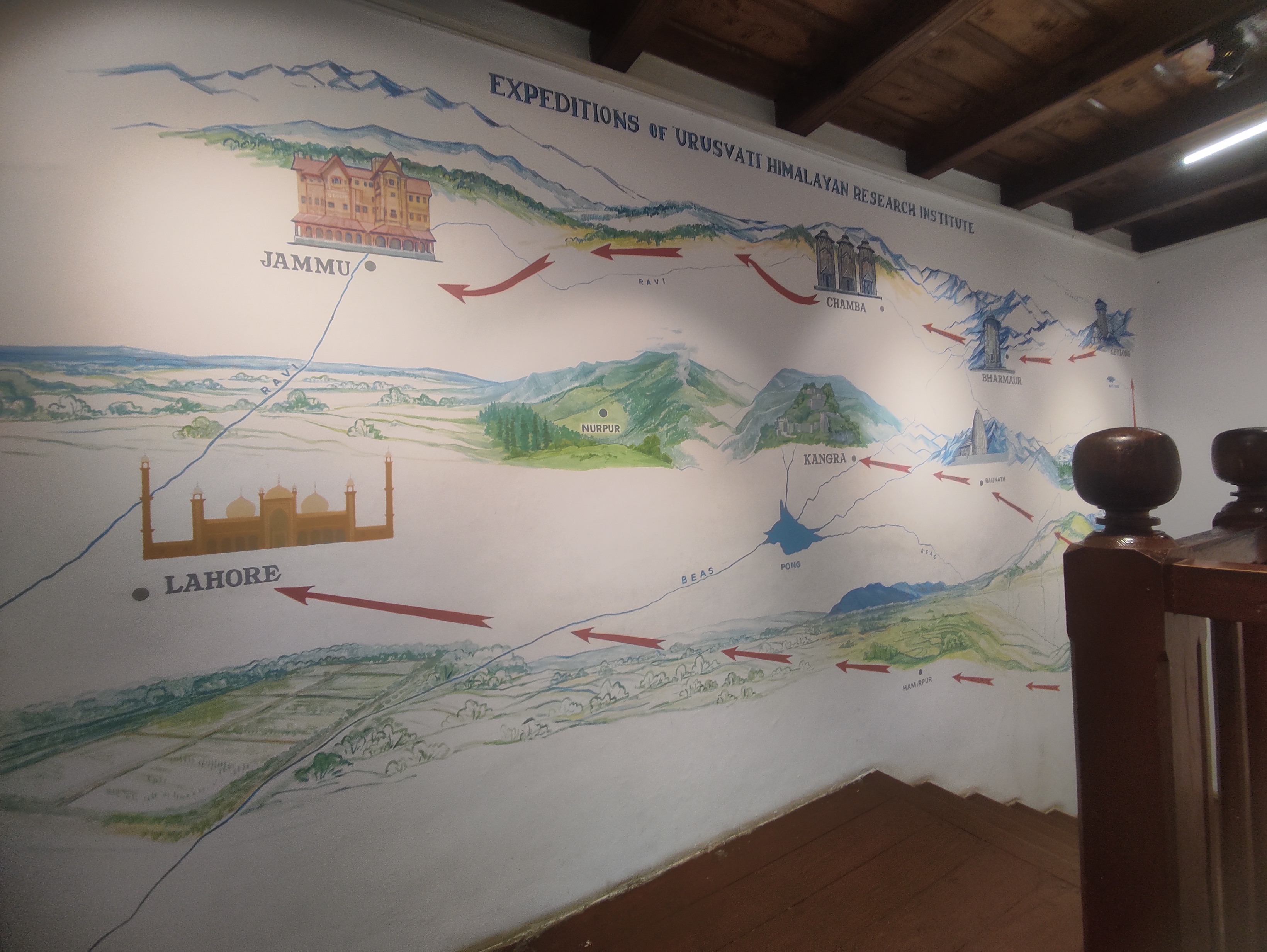
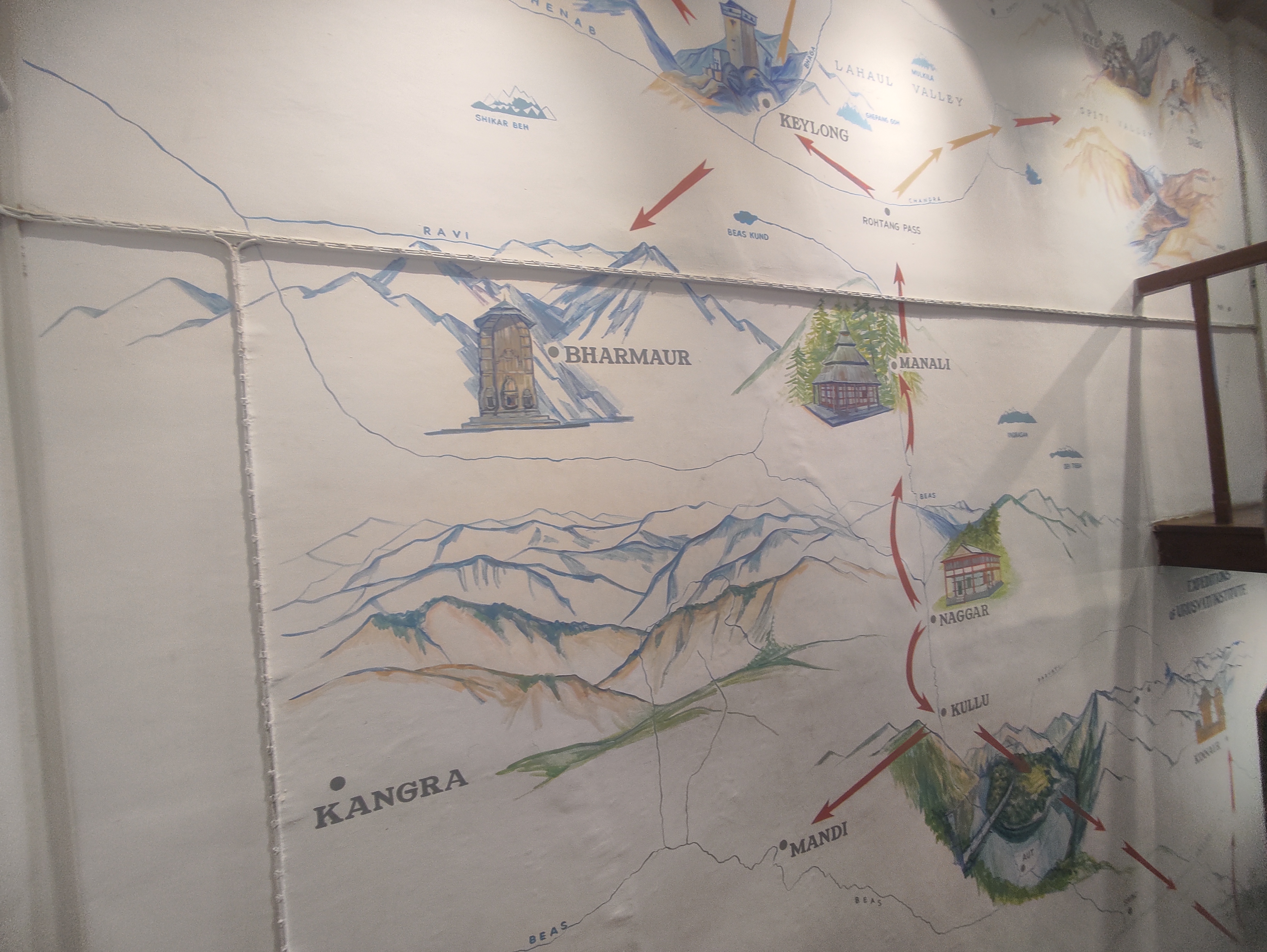
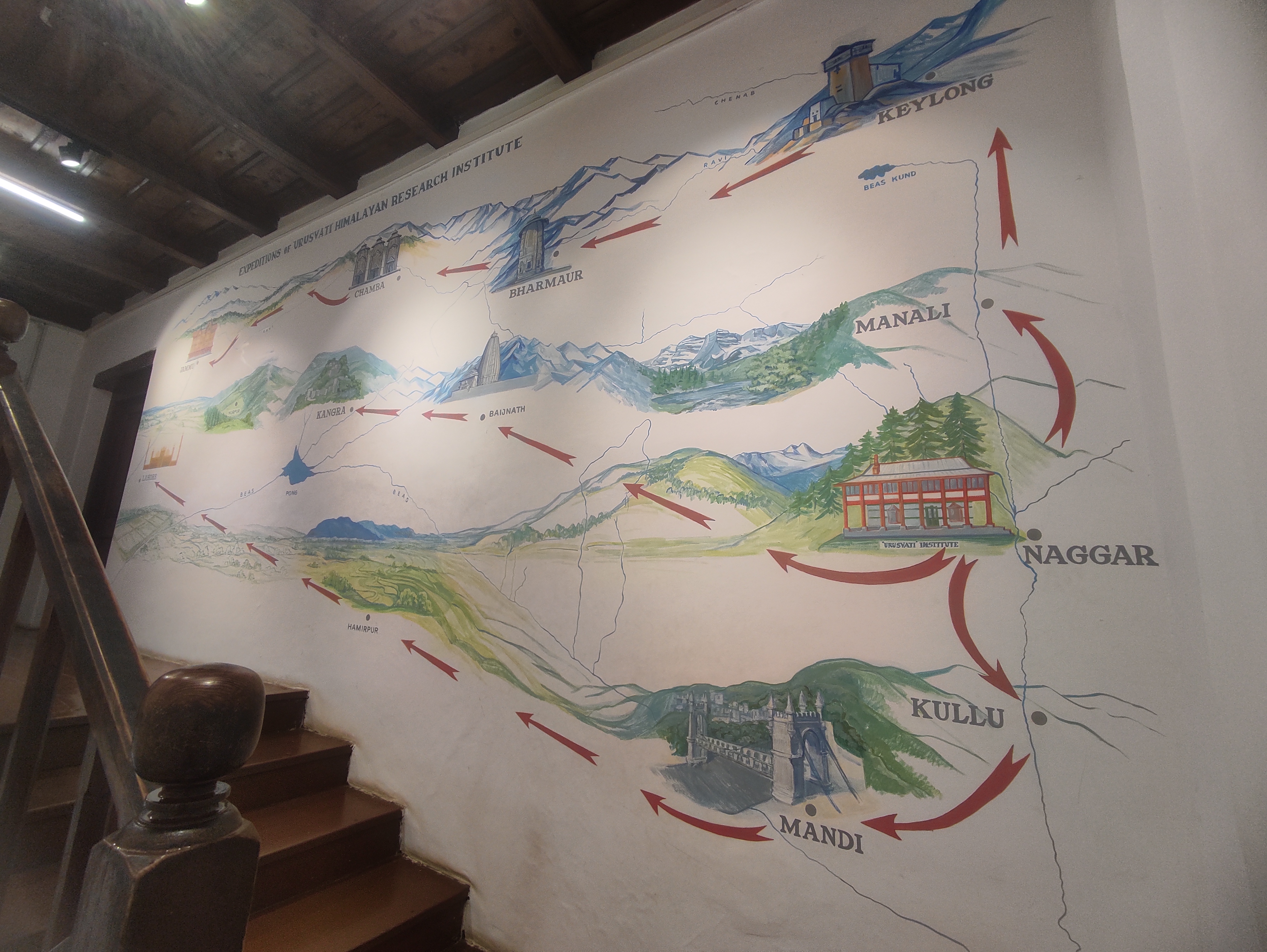
The descriptive wall art
Move further; you will find display cases with local folk art and traditional costumes from Kullu, and other parts of Himachal – an amalgamation of the cultures the artist cherished. Wandering to Roerich’s private rooms on the upper floor, we found old furniture standing as silent witnesses to the evenings he might have spent painting or maybe writing letters to his wife, Helena. Entry is restricted to visitors but my curiosity made me peek in to whatever was visible through the windows.
The gallery offers you more than art; it’s an invitation to understand the Himalayas through the eyes of a man who made them his muse.
As my friend went around with her camera, I paused for a while. Sitting under a deodar, I pondered the silent dialogue between the artist and these mountains while his brush tried to capture them through colours on the canvas. Every piece of work here reflects the person Roerich was – radiating solitude, a love for nature and the spiritual quest of a creative mind in its utmost honesty. This isn’t just art; it’s the Himalayas seen through a visionary’s eyes.
And gazing across the valley, one understands why…
It was late afternoon and I tried to imagine the magic which unfolds in the absolute silence every night. The spell was suddenly broken. Did I hear the call of a Himalayan bulbul somewhere or maybe it was just a fragment of my imagination!
As we waited to board a return bus to Manali, I wondered why didn’t anyone mention the Roerich Art Gallery Naggar sooner? Now that you know—don’t miss this Kullu Valley gem. Meanwhile, both of us keep trying to get the name pronounced correctly “Roerich” and it continues all the way back till Manali.
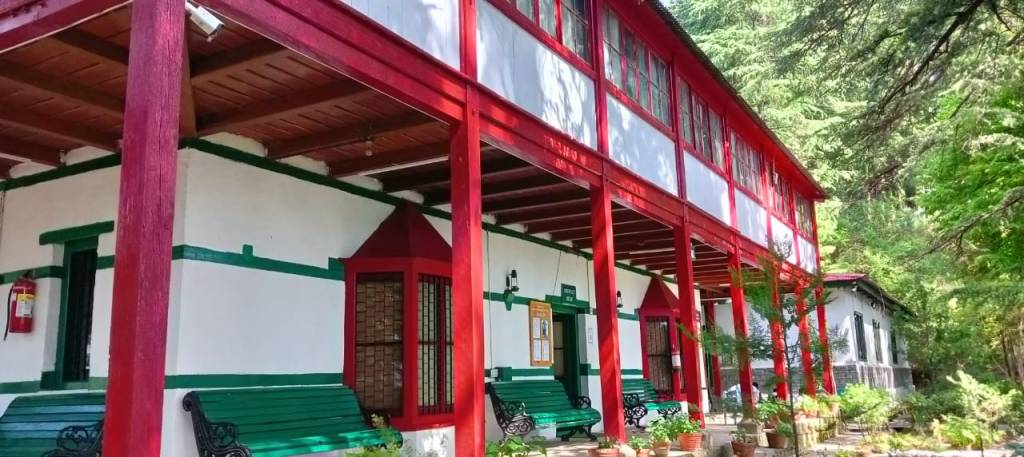
Entry to the main house
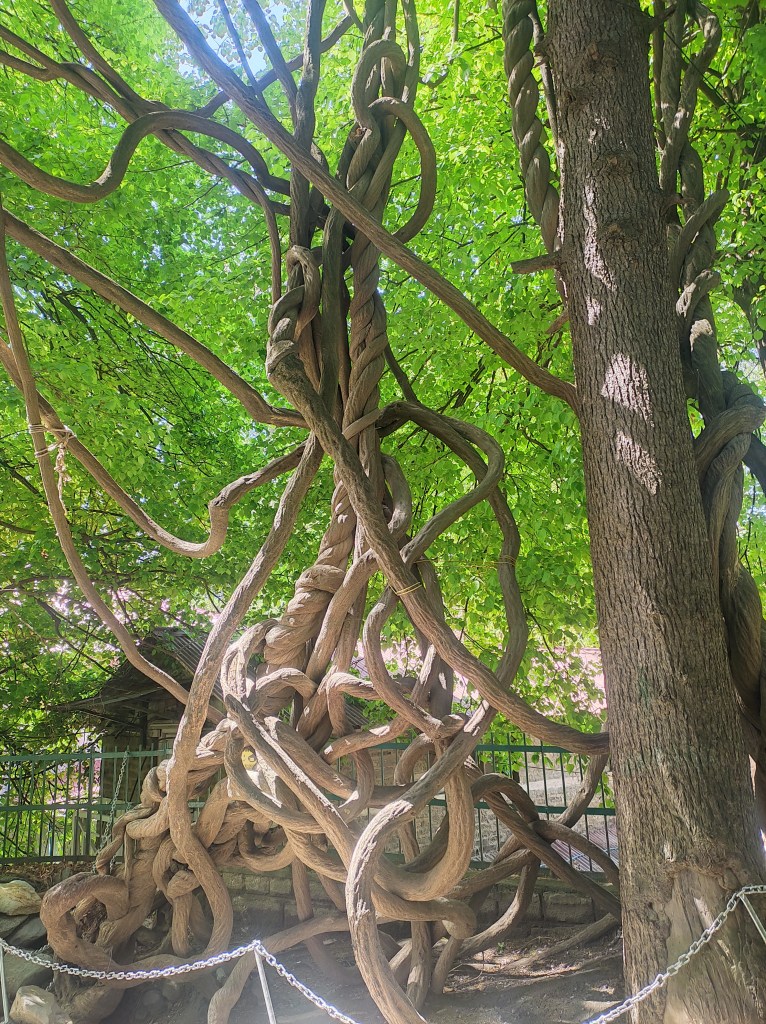
An old tree on the estate – Nothing less than a masterpiece
The information provided is based on firsthand experience and online research (for facts). For any further queries, feel free to leave a comment below or email. I will revert at the earliest.
 A Merakulous Life
Leave a comment